Covariation Studies of GPCRs Reveal New Opportunities for Therapeutic Intervention in Pain and Obesity
The University of Arizona, Tucson, AZ 85721
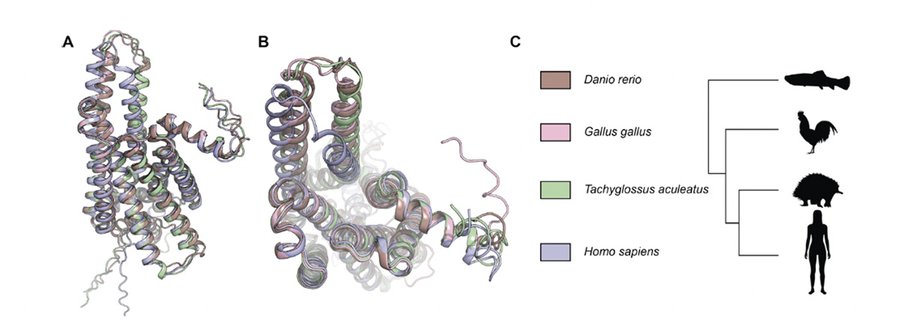
G protein-coupled receptors (GPCRs) represent one of the most important classes of drug targets for treating pain, obesity, and related disorders. Here, we describe a covariation-based framework that integrates sequence evolution, statistical modeling, and structural interpretation to systematically interrogate GPCR function. This approach enables the identification of activation pathways, allosteric binding pockets, and key microswitch residues that govern receptor signaling, providing actionable insights for drug discovery and targeted mutagenesis.
By combining computational chemistry, peptide synthesis, and state-of-the-art plasmon waveguide resonance (PWR) spectroscopy, we move beyond static structural models to capture the dynamic functional landscape of melanocortin receptors and opioid receptors. Our platform allows the analysis of thousands of naturally occurring and engineered genetic variants, revealing how sequence variation modulates receptor conformational states and signaling outputs.
This integrative strategy uncovers previously unrecognized regulatory sites and functional networks within GPCRs, opening new avenues for the development of selective therapeutics targeting pain, obesity, and associated metabolic disorders.